
24-Hour Emergency Garage Door Repair in London, Ontario: What Happens After Hours

A 24-hour emergency garage door repair is any call where the door can’t safely be left as it is until morning — a snapped spring, a frayed or loose cable, a door off its track, or a door stuck open on an unsecured home. Garage Door Solutions Inc. answers and dispatches around the clock across London, Ontario and the surrounding 50 km, sends the closest available technician rather than the next name on a list, and reaches most addresses in about 90 minutes. Overnight work is billed at the same flat rate as a Tuesday afternoon — from $149, with no after-hours premium, no weekend or holiday surcharge, and no travel fee inside 50 km — and the all-in price is confirmed before anything is touched.
- The test isn’t "how bad is it" — it’s "is the door safe and secure if I leave it until morning?"
- True 24-hour service means a technician dispatched overnight, not a call taken overnight and booked for Thursday.
- Overnight and holiday calls are the same flat rate here: from $149, no after-hours premium, no travel fee within 50 km.
- Most London-area addresses are reached in about 90 minutes because dispatch picks by distance, not by rota.
- The trucks stock springs, cables, rollers, and common opener boards, so the majority of night calls finish on the first visit.
- A door stuck open is an emergency even when nothing is broken — an open bay is an unlocked house.
- Ask three questions before you book: who is dispatched, what is the price before the truck moves, and what the warranty covers.
What makes a garage door problem a 24-hour problem
Plenty of garage door faults are annoying and none of them are urgent. A door that squeals, drags, or takes a second attempt to seal is a job for a weekday visit. The useful question at midnight isn’t how dramatic the failure looked — it’s whether the door is safe and the building is secure if you walk away and go to bed.
By that test, four situations earn an overnight call. A snapped torsion spring, which usually announces itself with a bang and leaves a door that suddenly weighs what it actually weighs. A cable that has frayed, jumped its drum, or gone slack, which puts the whole load on one side. A door that has come off its track and is sitting crooked in the opening. And a door stuck open — nothing broken, nothing dangerous, but an open bay is an unlocked house with your tools, bikes, and interior door behind it.
Everything else can usually wait for daylight. If you’re unsure which category you’re in, the short version of the triage lives in our guide to what to do first when a door fails.
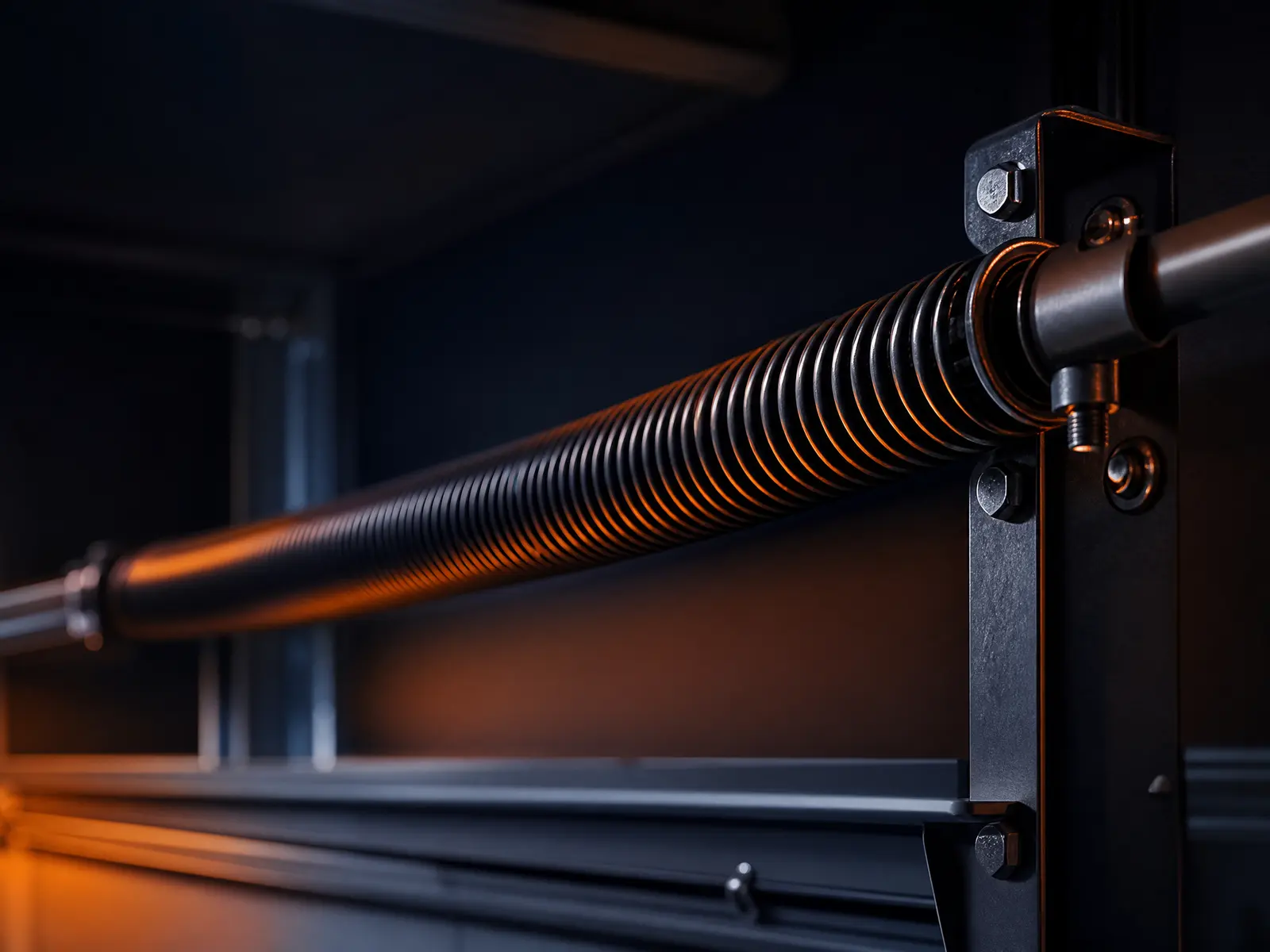
The first ten minutes, before anyone arrives
Stop using the opener. This is the single instruction that saves people the most money. Every extra press against a bound track or a dead spring is a chance to strip the opener gear, crease the top panel, or pull a roller out of the rail — turning one repair into three.
Then make the area boring: cars out of the way if they can move safely, kids and pets out of the garage, and the opener unplugged so nobody can send the door anywhere by accident. Leave the door exactly where it is. Do not pull the red release cord on a door with a broken spring — that cord hands you hundreds of pounds of unsupported steel.
Last, spend two minutes gathering detail, because it genuinely shortens the visit. What did you hear? Did the door stop suddenly or get worse over a week? Is it level in the opening or sitting on an angle? A photo from ten feet back and a second one of the spring bar above the door tells a dispatcher more than five minutes of description.
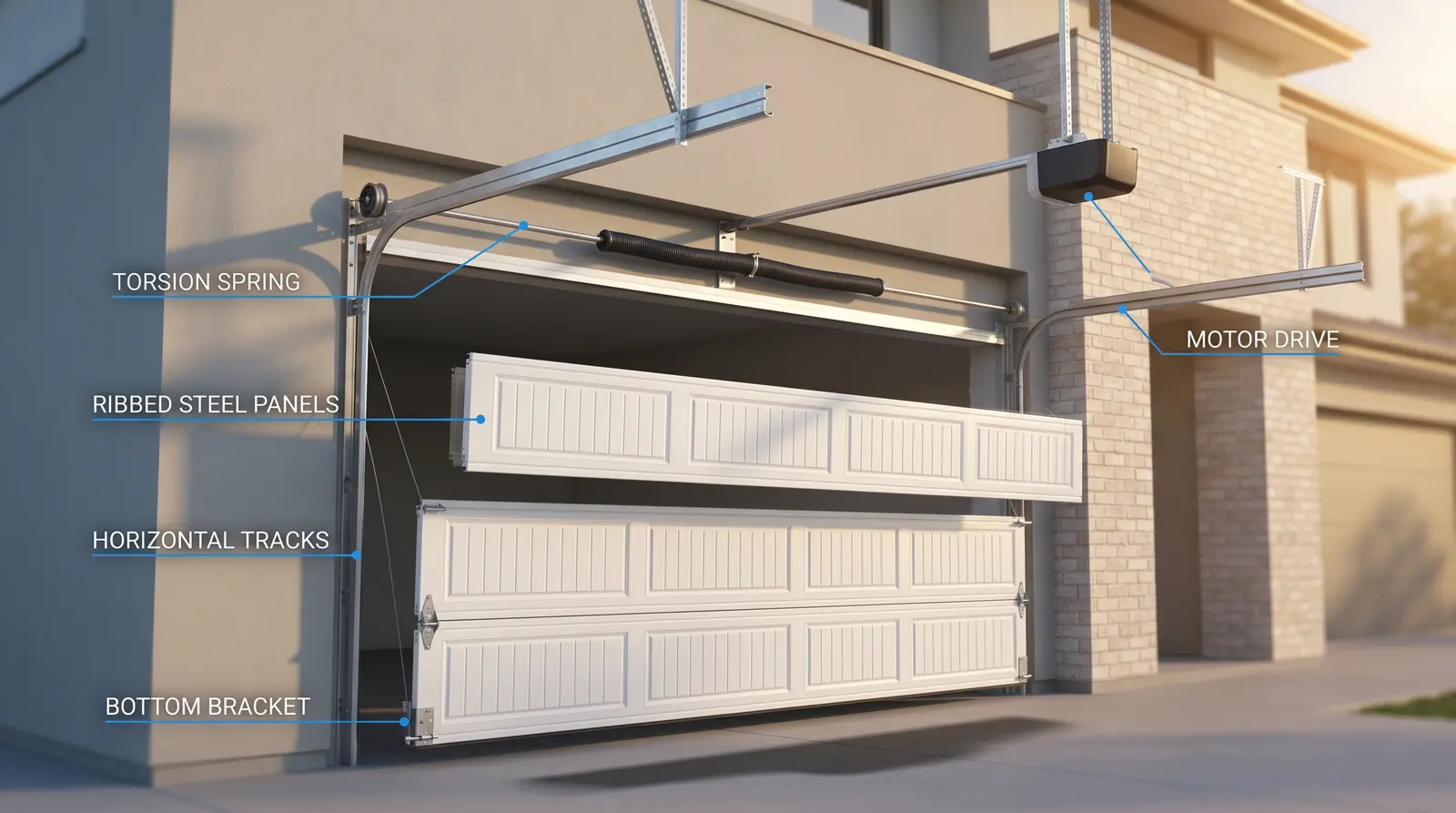
How an after-hours call actually runs in London
The call is answered by someone who can dispatch, not by a service that takes a message. You describe the symptom, whether a vehicle is trapped, and where you are. Dispatch then routes the closest available technician rather than the next name on a rotation — which is the mechanical reason most addresses across London and the surrounding 50 km are reached in roughly 90 minutes rather than "sometime tomorrow".
The truck arrives stocked, not empty. Matched-pair springs in the common sizes, cable sets, rollers, hinges, bottom brackets, and the opener boards that fail most often are all on board, which is why the large majority of overnight calls are finished on the first visit. The exceptions are genuinely uncommon parts — a discontinued opener logic board, a non-standard commercial drum — and you’ll be told that on the spot rather than after the invoice.
On arrival the technician inspects, explains what failed, and confirms the all-in number before touching anything. If the fix has to be staged — secure the opening tonight, replace a special-order part later in the week — you hear that plan before work starts, not halfway through.
Closest technician sent across London + 50 km, any hour — from $149 flat, no after-hours premium, no travel fee. Most calls reached in about 90 minutes.
Cables, rollers, and doors that jump the track at night
Springs get the headlines, but a good share of night calls are the quieter failures. A lift cable frays strand by strand for months and then lets go in one cycle, dropping one side of the door and leaving it wedged at an angle. A roller shatters or a bearing seizes, the door binds, and the opener’s force limit does exactly what it should — it stops.
These look less alarming than a snapped spring and are just as unwise to fight. A door off its track is being held by hardware that was never designed to carry it sideways, and the usual outcome of "just one more try" is a bent rail and a creased panel on top of the cable that started it. Leave it, and let the technician bring the door down under control.
If yours is stuck partway with a vehicle behind it, that’s the specific case walked through in our guide to a door stuck halfway — including why freeing the car is the technician’s first move, not yours.
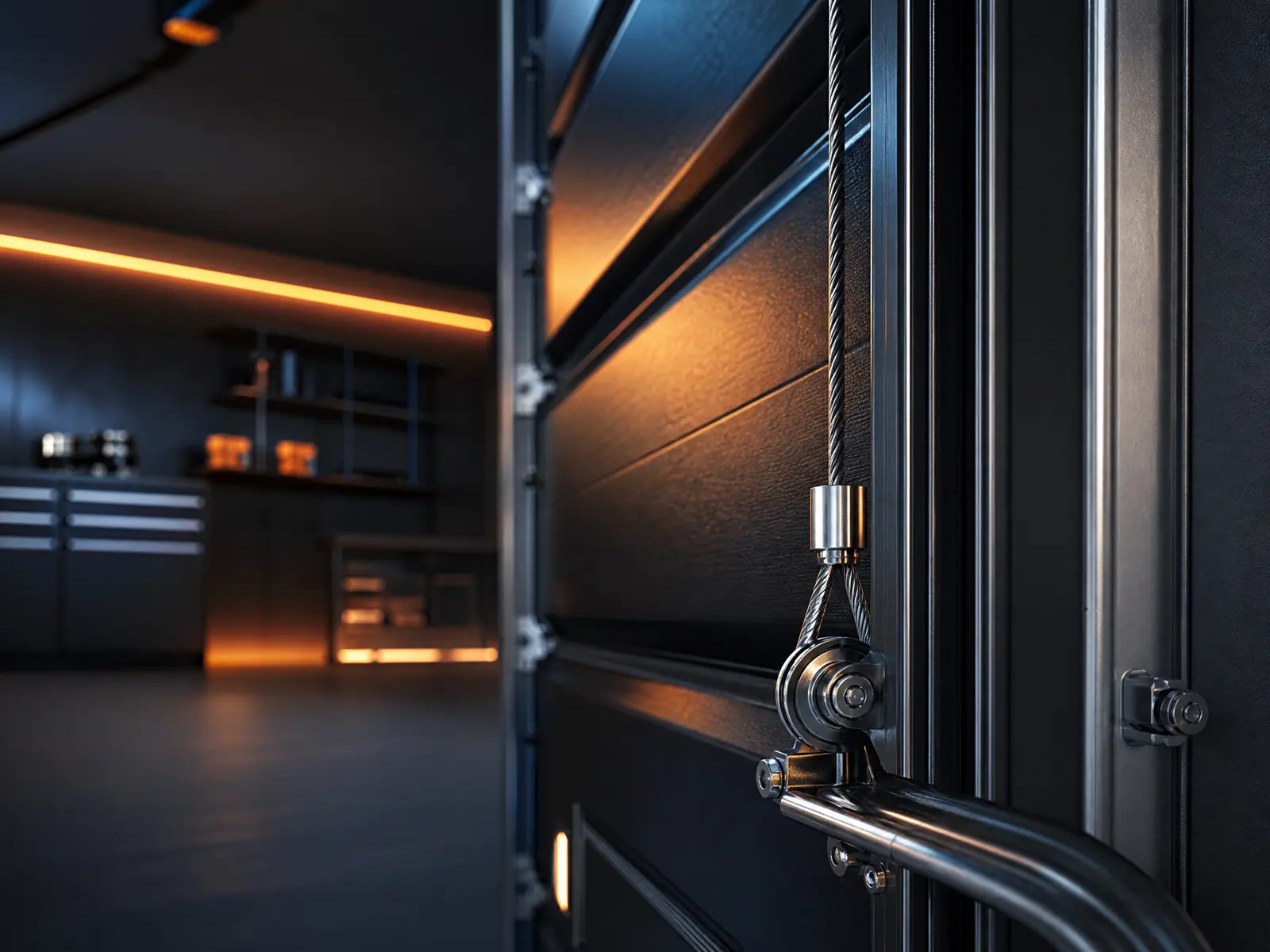
What a 2 a.m. repair costs — and what it shouldn’t
The number that matters most at night isn’t the total — it’s whether the total moved because it’s night. Here it doesn’t. Emergency work starts at $149 and is billed at the same flat rate whether the call lands on a Wednesday afternoon, a Saturday at midnight, or a statutory holiday. There is no after-hours premium, no weekend uplift, and no travel charge inside 50 km of London.
From that base the price follows the part, not the clock: spring replacement runs $229–$320 as a matched pair, cable and track work starts at $179, and opener repair starts at $189. Everything carries a 1-year warranty on parts and labour. Full ranges for the rest of the catalogue are laid out in the London repair cost breakdown.
The pattern worth refusing is the one where a low number is quoted on the phone and grows on the driveway — a trip charge here, a "night differential" there, a diagnostic fee that appears once the truck is parked. Ask for the all-in figure before the technician is dispatched and hold the company to it. A shop that can’t give you a real band over the phone at 2 a.m. is telling you something.
Winter nights are their own category
Between December and February, the overnight call volume in London roughly doubles, and it isn’t coincidence. Cold steel is brittle steel: a torsion spring that has been quietly running down its cycle life will almost always choose the first hard freeze to finish. Factory grease thickens, rollers and hinges bind, and an opener that coped all autumn suddenly hits its force limit and quits.
The other winter classic isn’t a breakdown at all — the bottom seal freezes to the slab overnight, and in the morning the opener is fighting a door glued to the concrete. That one is often solvable without a technician, and the full set of cold-weather fixes is in our winter troubleshooting guide. What it is never worth doing is holding the button down. The ice will win; the opener gear won’t.
The cheapest winter is the one where a tune-up happens in October — springs checked for cycle wear, balance re-set, hardware lubricated with something that still flows at minus twenty.
After-hours calls for shops, warehouses, and fleet bays
A commercial door that fails at closing time is a different problem from a residential one: the building can’t be locked, stock is exposed, and a bay that won’t open at 5 a.m. stops the day before it starts. Commercial and industrial doors are dispatched on the same 24-hour footing as homes across London and the surrounding region.
The hardware is heavier and the failure modes differ — jackshaft openers, high-cycle springs, tension-adjusted rolling steel, and operators wired into building systems rather than plugged into a wall. Where a part has to be sourced, the overnight priority is securing the opening so the building is closed and safe, with the permanent repair scheduled around your operating hours instead of through them. There’s more on the specifics in our warehouse and loading-bay repair guide.
How to tell a real 24-hour company from an answering service
Plenty of listings advertise 24/7 and mean "we answer 24/7". The difference shows up at 1 a.m., when the voice on the phone either sends someone or offers you a Thursday window. Three questions sort it quickly.
First: is a technician being dispatched tonight, and roughly when? A real answer is a time window and a name, not a promise to call back. Second: what is the all-in price before the truck moves, including any trip or after-hours charge? Any hesitation here is the answer. Third: what does the warranty cover, and for how long? Ours is a full year on parts and labour, and that is the industry’s reasonable floor, not a bonus.
Two more signals are worth weighting. A company that stocks parts on the truck will say so without being asked, because it’s the whole basis of a first-visit fix. And reviews written at odd hours — the ones describing a Sunday night or a holiday weekend — are the only reviews that actually test an after-hours claim.
What to have ready when you book
Have your address and the nearest cross street, the make of the opener if you can see it on the motor housing, and a one-line description of what changed and when. If a vehicle is trapped, say so early — it changes how the call is prioritised and what the technician does first on arrival.
If you’d rather see a number before you speak to anyone, the instant quote tool reads the symptom and your postal code and returns a real all-in band in under a minute, day or night. Otherwise, book the call and leave the door alone — the most useful thing you can do between now and the truck arriving is nothing at all.
Frequently asked questions
Is 24-hour garage door repair really available overnight in London, Ontario?
Yes. Garage Door Solutions Inc. answers and dispatches around the clock across London and the surrounding 50 km, including weekends and statutory holidays. The closest available technician is sent rather than the next name on a rotation, and most addresses are reached in about 90 minutes.
Does a garage door repair cost more at night or on a holiday?
No. Emergency work starts at $149 and is billed at the same flat rate at 2 a.m. as at 2 p.m. There is no after-hours premium, no weekend or holiday surcharge, and no travel fee within 50 km of London. The all-in price is confirmed before any work begins.
What counts as a 24-hour garage door emergency?
A snapped spring, a frayed or slack cable, a door off its track, or a door stuck open on an otherwise unsecured building. The test is whether the door is safe and the building is secure if it is left until morning — if the answer is no, it is an overnight call.
Should I pull the emergency release cord if my door is stuck?
Only if the springs and cables are intact. On a door with a broken spring, the release cord transfers hundreds of pounds of unsupported weight to you or to the floor. If anything looks broken, slack, or under load, leave the cord alone and wait for the technician.
How long does an overnight garage door repair take once the technician arrives?
Most spring, cable, and roller repairs are finished in one to two hours on the first visit, because the trucks carry matched-pair springs, cable sets, rollers, and common opener boards. Only uncommon parts — a discontinued opener board, for example — need to be sourced separately.
Why do so many garage doors fail on cold nights?
Steel becomes brittle as temperatures drop, so a spring near the end of its cycle life usually fails on the first hard freeze. Cold also thickens factory grease, which makes rollers and hinges bind and pushes the opener into its force limit. Most winter breakdowns in London happen between December and February.
Do you handle commercial and warehouse doors after hours?
Yes. Commercial, industrial, and loading-bay doors are dispatched on the same 24-hour footing as residential calls. Where a specialised part has to be sourced, the overnight priority is securing the opening so the building is closed and safe, with the permanent repair scheduled around your operating hours.
How can I tell if a company genuinely offers 24-hour service?
Ask whether a technician is being dispatched tonight and in what window, what the all-in price is before the truck moves, and what the warranty covers. A company that answers overnight but books you for a weekday is running an answering service, not a 24-hour crew.
Related guides
Emergency Garage Door Repair in London, ON: What to Do First
What counts as a garage door emergency, the safe steps to take right now, and how same-day 24/7 service works across London — most calls reached within 90 minutes.
Emergency Garage Door Repair Services in London, Ontario: Fast, Reliable 24/7 Solutions
A complete guide to 24/7 emergency garage door repair in London, Ontario — the repairs covered, how fast help arrives, what it costs, and how to spot trouble before it strands you.
Garage Door Repair Cost in London, Ontario: 2026 Guide
Real 2026 price ranges for every common garage door repair in London — springs, openers, cables, and tracks — plus what drives the number and how to dodge bait pricing.