
Why Won’t My Garage Door Open in the Cold? 7 Winter Fixes

A garage door that won’t open in the cold is usually frozen to the floor, has a contracted or snapped torsion spring, thickened grease in the tracks, or an opener that hit its force limit. Never force it — check for ice at the bottom seal first, then look for a visible gap in the spring. A snapped spring or off-track door needs a technician the same day.
- Ice bonding the bottom seal to the slab is the #1 winter cause — free the seal, don’t force the opener.
- Cold makes steel springs brittle; most spring breaks happen on the first hard freeze.
- Summer-weight grease thickens in the cold — use a garage-door-specific lubricant, never WD-40.
- If the opener reverses or strains, the door is out of balance, not "weak" — stop and inspect.
- A snapped spring, frayed cable, or off-track door is an emergency — same-day in London + 50 km.
Don’t force a frozen door
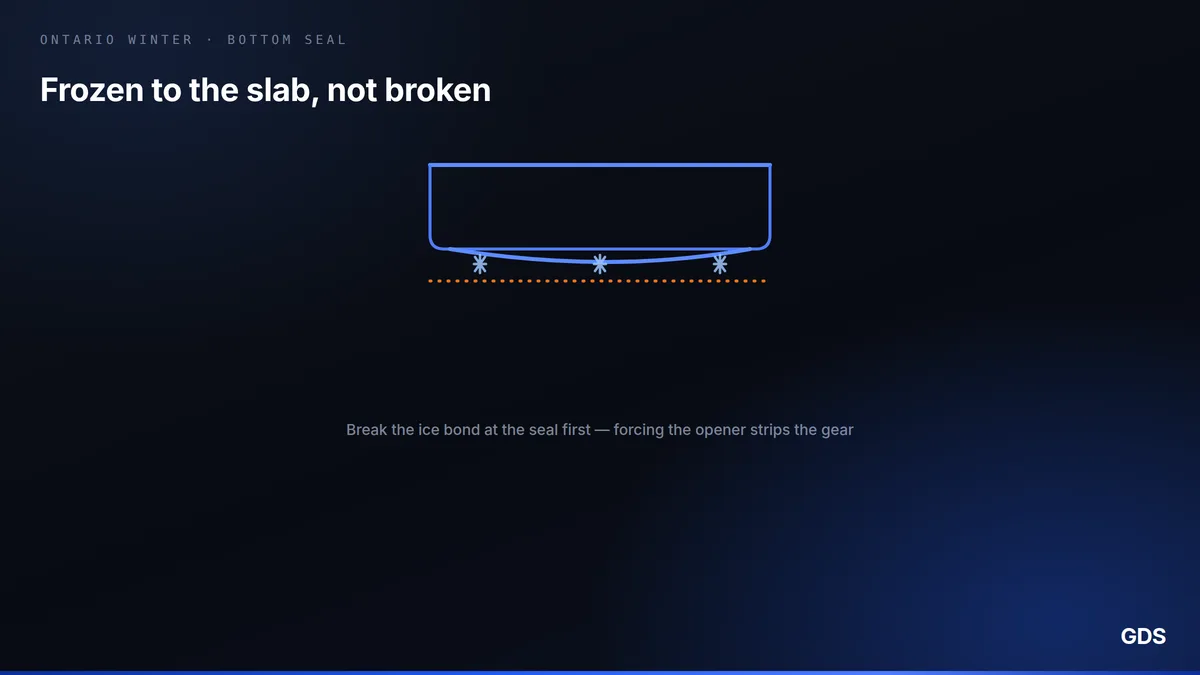
The single most common winter call we get in London is a door that "died" overnight. Nine times out of ten it isn’t broken — the rubber bottom seal has frozen to the concrete, and the opener is fighting a door glued to the floor. A seal that does this has usually gone rigid with age, and replacing it is what stops it happening again.
Forcing it does real damage: you can strip the opener gear, bend the top panel, or pop the door off its track. Instead, break the ice bond first (a hair dryer or a firm kick along the seal usually does it), then try the door by hand with the opener disengaged.
Check the torsion spring
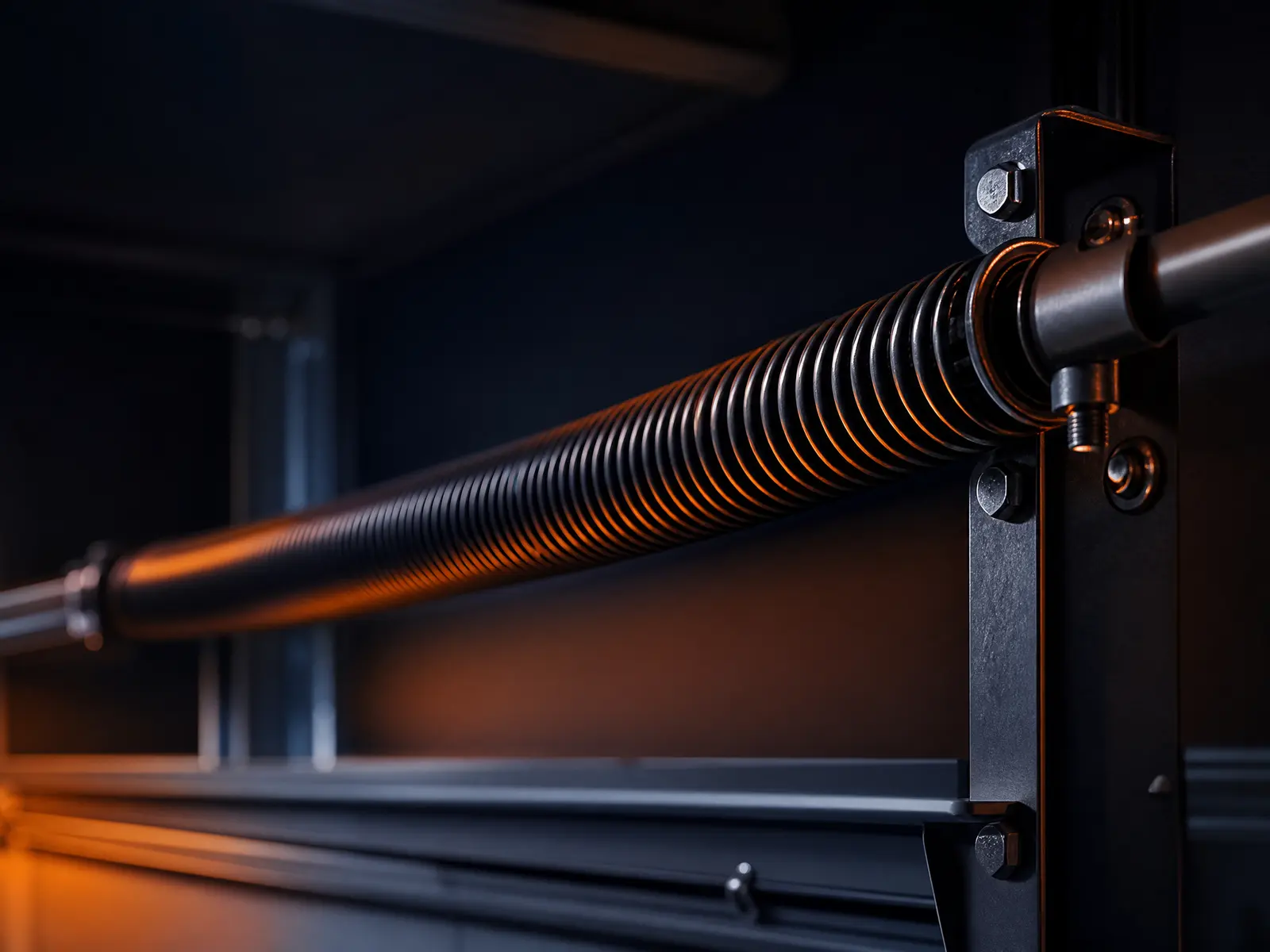
Cold steel is brittle steel. The overhead torsion spring carries the entire weight of the door, and the first deep freeze of the season is when tired springs let go — often with a bang like a gunshot.
Look at the spring above the door. A clean gap or a coil that has separated means it’s done. With a broken spring the door becomes hundreds of pounds of dead weight, so do not try to lift it or run the opener.
Lubricate — with the right product
Factory grease thickens as the temperature drops, and dry rollers and hinges bind. A quick service with a garage-door-specific silicone or lithium lubricant on the rollers, hinges, and spring will quiet a door and stop cold-weather sticking.
Skip WD-40 — it’s a solvent, not a lubricant, and it strips the grease you actually need.
Don’t force it. We dispatch the closest technician across London + 50 km — same flat rate, day or night, no after-hours fee.
Reset the opener’s force settings
Most openers have a force/sensitivity adjustment. In winter a door needs slightly more force to move, and an opener set too sensitive will reverse or stop partway. If the door moves fine by hand but the opener gives up, the force limit — or the door’s balance — is the culprit.
When to call a technician
Free seal ice and fresh lubrication are safe DIY. Anything involving the spring, cables, or a door off its track is not — those are under extreme tension and cause the most serious injuries in this trade.
If you see a broken spring, a hanging cable, or a crooked door, stop and book a same-day visit. We carry winter-rated parts on every truck across London and the surrounding 50 km.
Frequently asked questions
Is it bad to use the opener on a frozen garage door?
Yes. Forcing the opener against a door frozen to the floor can strip the gear, bend the top panel, or pull the door off its track. Break the ice bond at the bottom seal first and test the door by hand.
Why do garage door springs break in winter?
Steel becomes more brittle in cold temperatures, and a spring already near the end of its cycle life will usually fail on the first hard freeze. Most spring breaks we see happen between December and February.
Can I open my garage door manually if the spring is broken?
No — with a broken spring the door is hundreds of pounds of unsupported weight and can fall. Leave it down, disconnect the opener, and call a technician.
Related guides
Garage Door Spring Repair Cost in London, Ontario (2026)
Real 2026 numbers for spring replacement in London — torsion vs extension, single vs double, and why a good shop always replaces springs in pairs.
Should You Repair or Replace Your Garage Door?
The 50% rule, the age test, and the resale math that tells you when to fix a garage door — and when a new insulated door is the smarter spend.
Garage Door Bottom Seal and Weather Seal Replacement in London
Four different seals close the gaps around a garage door, and they fail in different ways. How to tell which one has gone, how to match a bottom seal to its retainer, and what replacement costs.