
How to Winterize Your Garage Door for an Ontario Winter

To winterize a garage door in Ontario: replace cracked bottom weatherstripping so it can’t freeze to the slab, lubricate rollers, hinges, and springs with a garage-door-specific (not WD-40) product, test the door’s balance, and clean the safety sensors. Doing this in the fall prevents the frozen seals and brittle-spring failures that make winter the busiest breakdown season.
- Replace worn bottom weatherstripping before it freezes to the floor.
- Lubricate moving parts with a silicone or lithium garage-door spray.
- Test balance — cold makes a weak spring fail fast.
- Keep sensors clean; snow and salt grime knock them out of alignment.
- A fall tune-up is the cheapest insurance against a January breakdown.
Seal out the cold
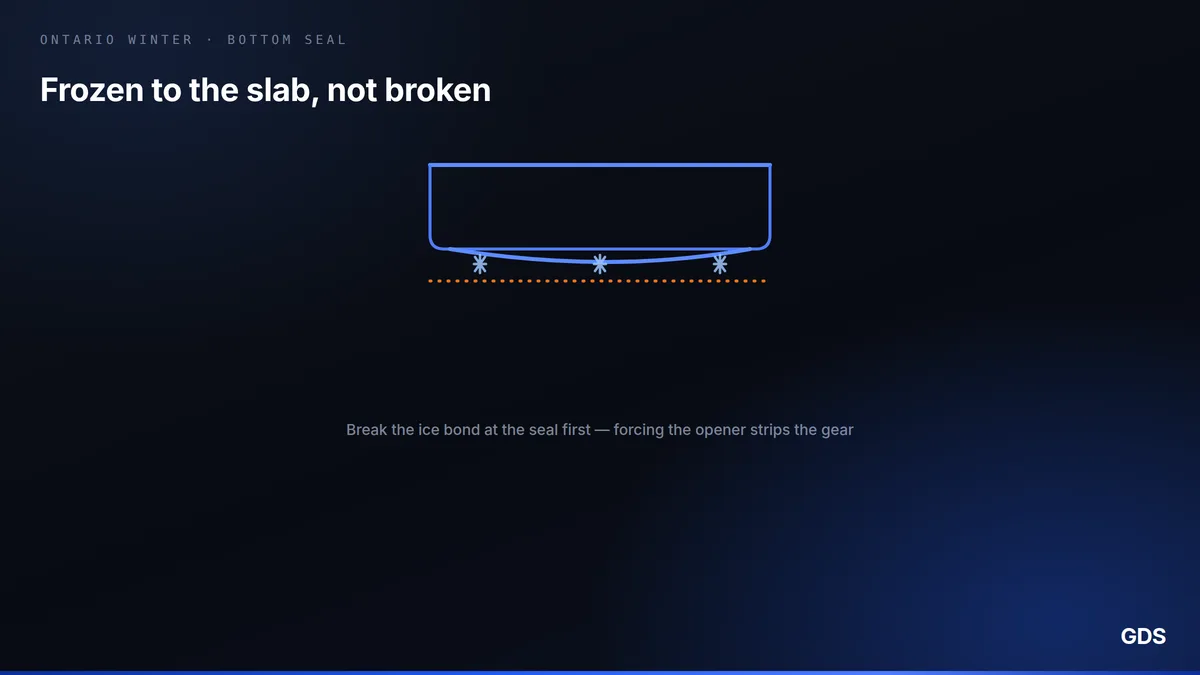
The number-one winter call is a door frozen to the slab. Replacing cracked or hardened bottom weatherstripping before the freeze stops the rubber from bonding to the concrete — and keeps the garage warmer. Check the perimeter seals too, and match any new bottom seal to your retainer profile rather than buying by picture.
Lubricate for the cold
Factory grease thickens as temperatures drop and dry rollers bind. A fall service with a garage-door-specific silicone or lithium lubricant on rollers, hinges, and springs keeps everything moving smoothly. Never use WD-40 — it strips the grease you need. Here are the six points that need lubricant, and the one part you must never grease.
Check balance and sensors
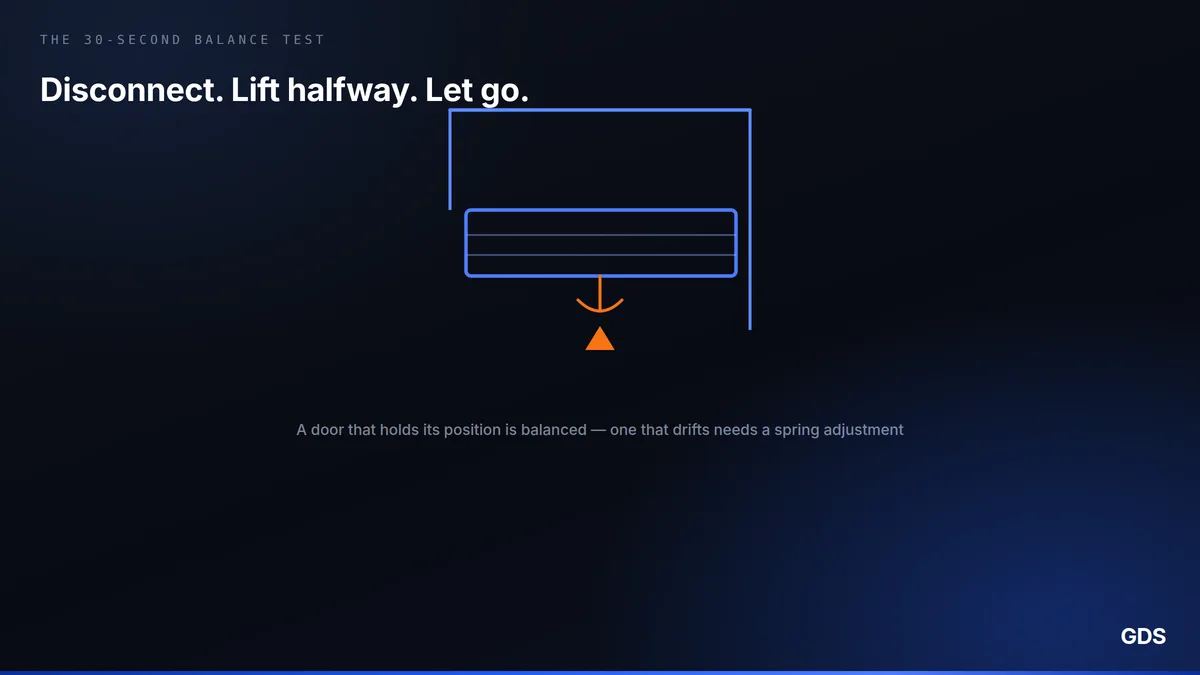
Cold steel is brittle steel, and a tired spring usually snaps on the first hard freeze. Test the balance (lift the door halfway by hand — it should stay put) and have a weak spring replaced before winter. Finally, keep the photo-eye sensors clean, since snow and road-salt grime knock them out of alignment.
A fall 17-point tune-up — lubrication, balance, weatherstripping, and sensors — is from $150 across London + 50 km. Book before the cold hits.
Frequently asked questions
How do I stop my garage door freezing to the ground?
Replace cracked or hardened bottom weatherstripping before winter so the rubber can’t bond to the slab, and keep the area clear of ice. If it does freeze, break the ice bond before running the opener.
What lubricant is best for a garage door in winter?
A garage-door-specific silicone or lithium spray, which stays effective in the cold. Avoid WD-40 — it’s a solvent that removes the grease the door needs.
Why do garage door springs break in winter?
Steel becomes more brittle in the cold, so a spring near the end of its life usually fails on the first deep freeze. A fall balance check and spring replacement prevents it.
Related guides
Why Won’t My Garage Door Open in the Cold? 7 Winter Fixes
Frozen to the floor, opener straining, spring snapped on the first cold snap — the seven things that stop a garage door in an Ontario winter, and which you can fix yourself.
Essential Tips for Garage Door Repair & Care in London
The handful of maintenance habits that prevent most breakdowns in London’s climate — and the line where DIY should stop.