
Power Out? How to Open Your Garage Door — and Reconnect It After
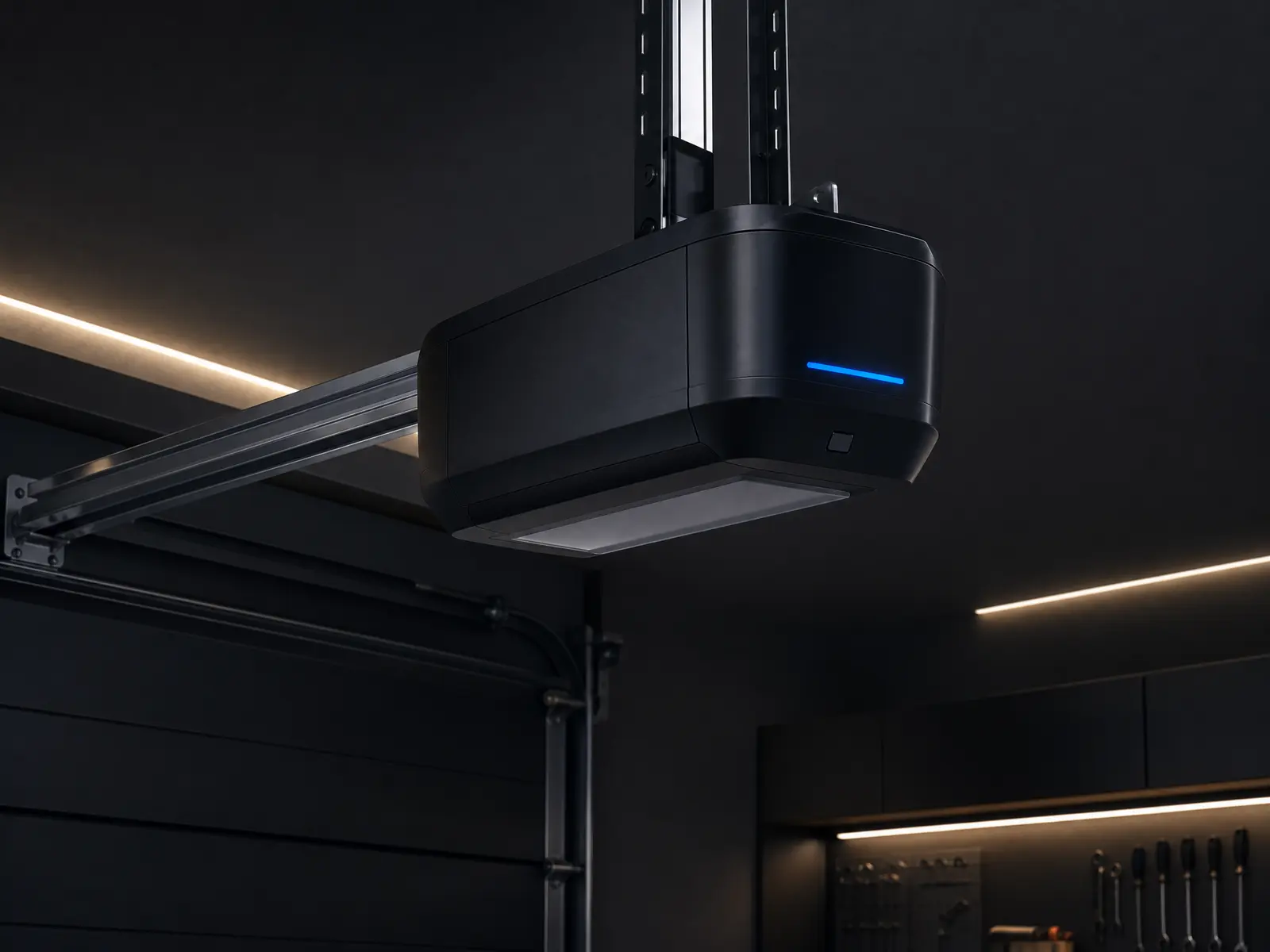
To open a garage door in a power outage, make sure the door is fully closed, pull the red emergency release cord straight down to disconnect the opener, then lift the door by its handle. A healthy door lifts with little effort and stays open on its own; if it feels very heavy or drops, a spring is likely broken — stop and lower it. While the opener is disconnected, use the door’s slide lock. When power returns, unlock the door, reconnect the trolley and run one full cycle. If the opener won’t run after the outage, opener repair in London starts at $189.
- Pull the release cord only with the door fully closed — never to raise or lower a door that is open or stuck partway.
- A balanced door lifts easily and stays put. A heavy door usually means a broken spring: stop.
- A disconnected door can be lifted from outside. Use the slide lock until power is back, then unlock it before running the opener.
- Most openers reconnect on the next full cycle once the release is reset; some need the trolley lined up by hand.
- If the garage is your main way into the house, a battery-backup opener keeps the door working through short outages.
Can you open a garage door when the power is out?
Yes. The opener is just a motor that pulls the door along a rail; the springs do the real lifting. Every residential opener has an emergency release — the red cord hanging from the trolley on the rail — that disconnects the door from the motor so you can move it by hand. Unless your opener has a battery backup, that cord is how you get the car out.
Outages here are rarely long, but they are common enough to plan for. In March 2025 a single transmission fault cut power to 68,018 London Hydro customers — about 40% of the city — for 22 minutes. Windstorms bring down lines across Middlesex every autumn. The time to find your release cord is now, with the lights on, not in the dark with a flashlight in your teeth.
How do I open my garage door manually, step by step?
Start with the door fully closed. Chamberlain, which makes LiftMaster and Chamberlain openers, tells owners to use the release only when the door is fully closed, and never to pull it to raise or lower a door. With the door down, the springs are holding the weight and nothing can move when the cord lets go. Pull the release on a door that is open or stuck halfway and, if a spring or cable has failed, the door can drop the instant the motor stops holding it.
Next, look up at the springs before you lift. A torsion spring that has snapped shows an obvious gap of a few centimetres between coils on the bar above the door. If you see one, stop here — the door is now carrying its full weight and will not lift safely. Our guide to broken spring signs shows what to look for.
Then pull the red cord straight down. You should feel or hear the trolley release. Take the handle on the inside of the bottom panel — not the panel joints, which can pinch fingers — and lift steadily. A healthy door feels light and stops wherever you let go. Drive out, lower the door the same way, and keep your hands clear of the section joints as it closes.
If the door will not budge at all in cold weather, check the bottom seal before you pull harder. A seal frozen to the floor is common in a London winter, and forcing it tears the rubber. Our cold-weather fixes cover freeing it without damage.
What if the door is heavy or won’t stay open?
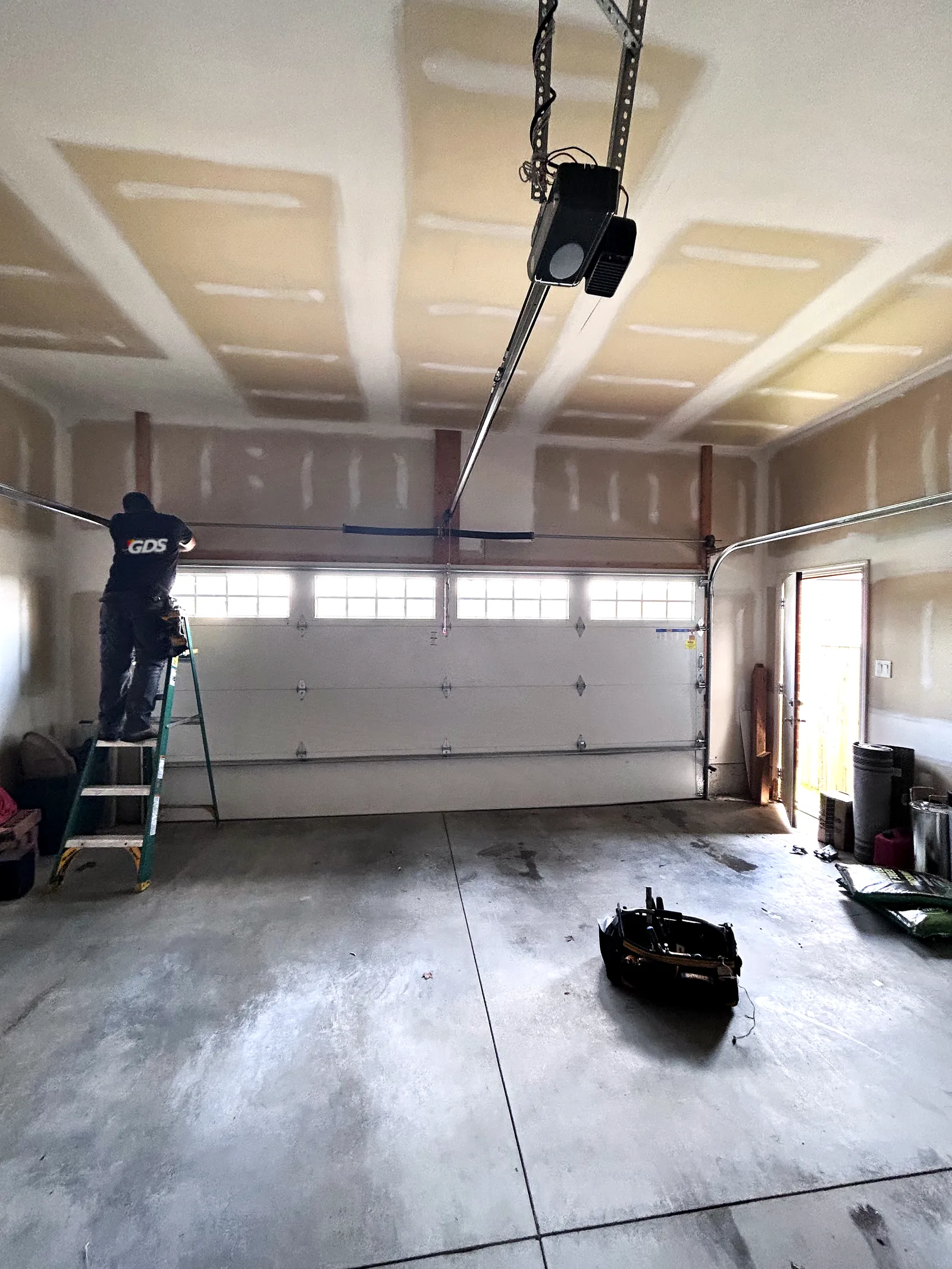
Treat that as a warning, not a workout. The door is designed to be counterbalanced by its springs, so a single-car door should lift with modest effort. If you are straining, or the door sinks back down as soon as you let go, the springs are no longer carrying it — either one has broken or they have lost tension. Lower the door carefully and leave it closed. A door that won’t hold position is a balance problem, and lifting it by hand or with the opener will only make it worse.
Do not prop a heavy door open with a ladder or a piece of wood to get a car out. If the car is trapped behind a door that will not lift safely, call us — our emergency line runs 24/7, and spring replacement in London is $229–$320 with a 1-year warranty on parts and labour.
Surge-damaged logic boards, trolleys that won’t re-engage, remotes that dropped out — diagnosed on site with an up-front price and a 1-year warranty.
How do I keep the garage secure while the opener is disconnected?
This is the step most guides skip. A closed opener normally acts as the door’s lock: the motor holds the trolley and the door can’t be lifted from outside. Once you pull the release, that’s gone. Anyone can lift a disconnected door from the driveway.
Most sectional doors have a manual slide lock on the inside of a side panel — a bar that slides into a hole in the track. With the opener disconnected, slide it across. Garaga’s guidance is to use the side lock while the power is out and to release it before reconnecting the trolley. That order matters: running an opener against a locked door can bend a panel, a track or the opener arm.
If you can’t get back into the house except through the garage, check whether your door has an outside keyed release — a small lock near the top of the door. Chamberlain is clear that it only disconnects the opener; it does not lift the door. Without one, and without another way in, you cannot work the door from outside during an outage.
How do I reconnect the opener when the power comes back?
First, make sure the slide lock is open and nothing is in the doorway. Then reset the release. On Chamberlain and LiftMaster T-rail openers, you pull the cord straight down once more and run the opener — the trolley re-engages on the next up or down cycle. On their square-rail models, pull the cord toward the opener so the release arm returns to horizontal and run one full open-and-close cycle; if it doesn’t catch, run it once more. Wall-mount openers reset by pulling the release handle down firmly until it clicks.
Genie’s instructions are slightly different: push the release lever up with a broom handle, or pull the cord up and toward the motor until it clicks. Some Genie models also need the carriage lined up with the connector on the belt or chain before they will catch.
Once it is reconnected, open and close the door with the wall button and then the remote. Watch the door come down to the floor and reverse when you break the safety-sensor beam. If the wall button works but the remote doesn’t, our remote-troubleshooting guide walks through the likely causes.
Why won’t my opener work after a power outage?
Start with the simple things. Check the breaker and, if the opener plugs into a GFCI outlet, press its reset button. Genie suggests unplugging the opener for up to 30 seconds and plugging it back in, which clears a confused logic board more often than you’d expect. Make sure the trolley actually re-engaged — a motor that hums and runs the chain while the door stays put is still disconnected.
If the opener is completely dead, or the lights come on but the motor won’t run, the logic board may have taken a surge when the power returned. That is a part, not a setting, and it is worth having diagnosed before buying a whole new unit. Opener repair in London starts at $189, and if the unit is old enough that replacement makes more sense, our opener replacement guide compares the current models.
Do I need a battery backup garage door opener in Ontario?
It isn’t required by code here. It is a convenience, and for some households it’s the right one: if the attached garage is the way you usually get in and out, if anyone in the house can’t easily lift a door, or if you simply don’t want to deal with the red cord in a storm. Garaga notes that LiftMaster and Chamberlain backup units can run the opener up to about 20 times without power — enough to ride out a typical outage.
Many current belt-drive and wall-mount openers either include a battery or accept one as an add-on, so ask before you replace a working opener. And whatever you have, find the release cord, the slide lock and your nearest flashlight this week — it takes two minutes and saves a frustrating one at night.
Frequently asked questions
How do you open a garage door when the power is out?
With the door fully closed, pull the red emergency release cord straight down to disconnect the opener, then lift the door by the handle on the bottom panel. A healthy door lifts easily and stays open on its own. If it feels very heavy or drops, a spring is probably broken — lower it and call a technician.
Is it safe to pull the emergency release cord with the door open?
No. Chamberlain advises using the release only when the door is fully closed and never pulling it to raise or lower the door. If a spring or cable has failed, an open door can fall the moment it is disconnected from the opener.
How do I reconnect my garage door opener after a power outage?
Unlock the door’s slide lock first. On most LiftMaster and Chamberlain rail openers, reset the release with the cord and run the opener — the trolley re-engages on the next cycle. Genie openers reset by pushing the release lever up with a broom handle or pulling the cord toward the motor until it clicks.
Why is my garage door opener not working after the power came back?
Check the breaker and any GFCI outlet, then unplug the opener for about 30 seconds and plug it back in. Make sure the trolley re-engaged. If the unit is still dead, the logic board may have been damaged by a surge; opener repair in London starts at $189.
Can someone open my garage door while the opener is disconnected?
Yes. Once the release is pulled, the opener no longer holds the door shut, so it can be lifted from outside. Use the manual slide lock on the inside of the door until power returns, and unlock it before you run the opener again.
Are battery backup garage door openers required in Ontario?
No, they are not required here. They are a convenience that keeps the door working through short outages, which is worth having if the garage is your main entrance or lifting the door by hand is difficult for anyone in the house.
Related guides
Garage Door Opener Replacement in London, ON: Best Models for 2026
When a garage door opener is worth replacing in London, the best belt, chain, and wall-mount models for 2026, what installation costs, and which smart features actually matter.
Garage Door Remote Not Working? 9 Fixes Before You Buy a New One
The wall button works but the remote is dead — or it only works from two feet away. The nine causes we actually find on service calls, in the order you should check them.
Garage Door Won’t Stay Open? That Is a Balance Problem
A door that will not hold its position has stopped being counterbalanced — and every cycle after that is being paid for by your opener. The five-minute test, the four causes, and why spring tension is not a DIY adjustment.