
Noisy Garage Door? What Every Squeak, Grind and Bang Means

A noisy garage door is a diagnosis you can do by ear. Squealing or squeaking means dry hinges, rollers, or springs — fixed with garage-door lubricant in 20 minutes. Grinding means worn steel rollers or a track problem. Rattling is loose hardware. Rhythmic slapping is a loose opener chain, and a motor that hums-and-grinds has a stripped gear. One single gunshot-like BANG from the garage means a torsion spring just broke — stop using the door and call a technician.
- Squeak or squeal = dry hinges, rollers, or springs. Lubricate with silicone or lithium spray — never WD-40.
- Grinding or scraping = worn steel rollers or a bent track; nylon rollers are the permanent cure.
- Rattling = loose nuts and track bolts; vibration backs them off a little every cycle.
- A single loud BANG = a snapped torsion spring. Don’t run the opener — that’s a same-day service call.
- A $150 tune-up — lubrication, tightening, balance check — silences most doors and doubles part life.
Squealing and squeaking: the door is thirsty
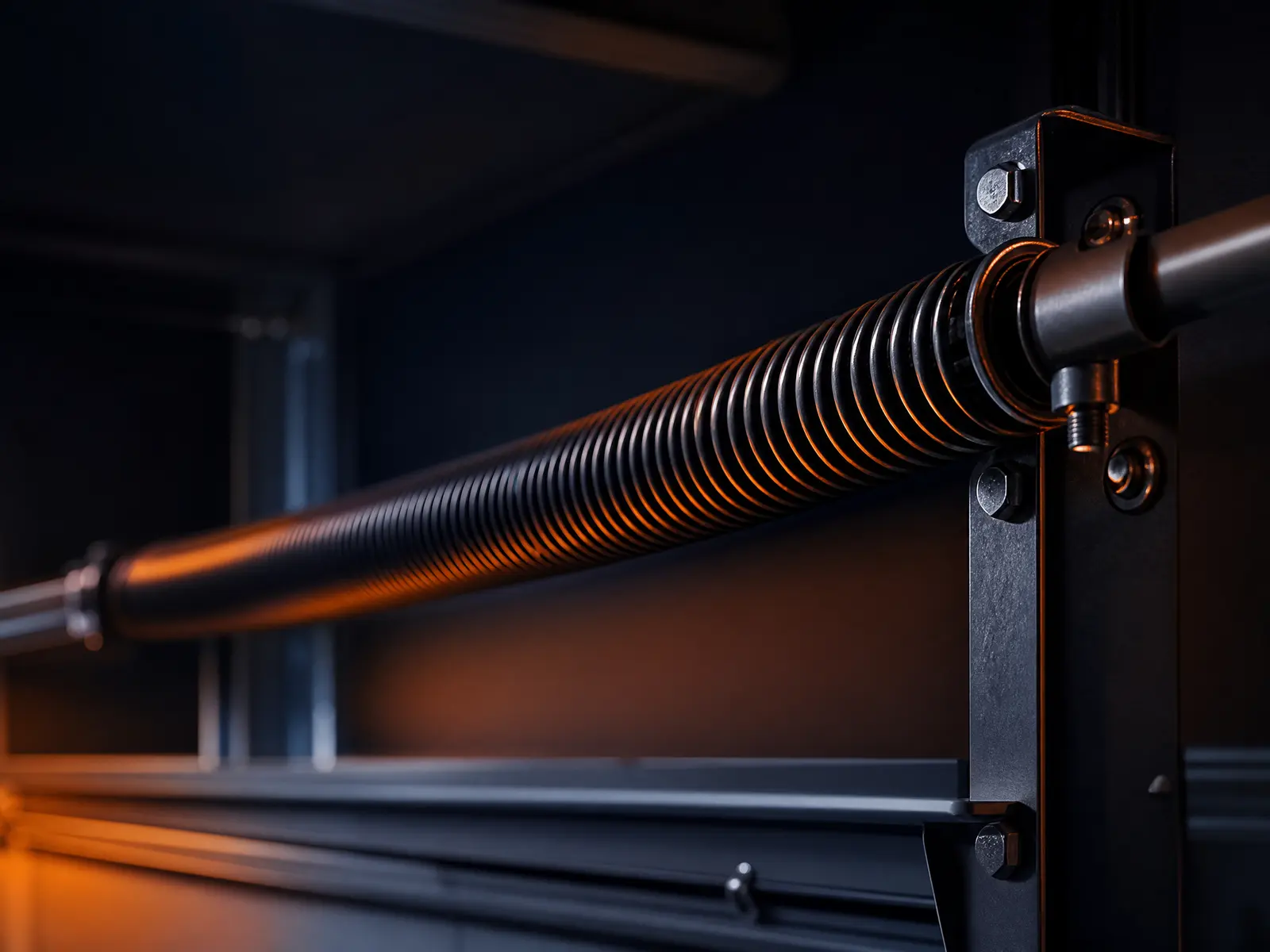
The most common noise, and the cheapest fix. Steel hinges, roller bearings, and spring coils all need a film of lubricant; when it dries out — and every London winter dries it out — they announce it on every cycle. Apply a garage-door-specific silicone or lithium spray to the roller bearings, hinge pivots, and across the torsion spring, then run the door twice to spread it.
The classic mistake is reaching for WD-40: it’s a solvent, not a lubricant, and it strips what grease is left — quieter for a week, worse for a month. The other rule: never lubricate the track itself. Rollers should roll on clean, dry steel; grease in the track collects grit and makes doors stick and slip. Our step-by-step guide to lubricating a garage door covers the six points that need it and the ones that don’t.

Grinding and scraping: metal asking for retirement
A grinding, gravelly sound is metal wearing on metal — usually the original builder-grade steel rollers, whose bearings dry out and flat-spot with age. If a roller wobbles visibly when the door runs, its bearing is finished. Scraping that comes with visible rub marks on the track means the track is out of alignment or a roller is about to jump it — which is how doors end up off the track entirely.
The permanent cure is a set of sealed-bearing nylon rollers: they cost little, last 15+ years, and are the single biggest noise upgrade a door can get — here’s how nylon and steel rollers actually compare, and what a full set costs. Swapping the bottom rollers is a tech job — they’re attached where the cable tension lives. If the grinding comes from the shaft above the door rather than from the panels, it is more likely a failed end bearing or cable drum.
Rattling and clunking: the ten-minute wrench pass
Every open-close cycle vibrates the door’s dozens of fasteners, and over years the track-bracket bolts, hinge screws, and opener-rail hardware all back off a little. The result is a door that sounds like a shopping cart. With the door down and the opener unplugged, snug (don’t gorilla) every accessible nut and bolt on the hinges, track brackets, and opener rail. A clunk from one spot as the door passes usually means one specific hinge is worn oval — replace that hinge before it cracks.
Full lubrication, nylon roller options, hardware tightening, and a balance + safety test — one visit, flat price, across London + 50 km.
Opener noise: slap, hum, and grind
If the racket comes from the opener rather than the door, the sound narrows it fast. A rhythmic slap is a loose chain — adjustable in minutes at the rail turnbuckle. A hum-then-grind with no door movement is the classic stripped main gear on an older chain-drive unit; the gear kit is replaceable, though on a 15-year-old opener the money is usually better put toward a quiet belt-drive upgrade from $189. And if the opener strains or the lights dim as it lifts, the door is out of balance — that’s a spring problem wearing an opener costume, and it needs a professional balance check.
The one sound you never ignore
A single, very loud bang from the garage — homeowners always say "like a gunshot" — is a torsion spring letting go. The door will suddenly weigh hundreds of pounds, the opener will strain and give up, and lifting it by hand becomes dangerous. Leave the door down, unplug the opener, and book a same-day spring replacement.
For everything short of that bang, the maths is simple: a $150 tune-up — full lubrication, hardware tightening, roller inspection, and a balance and safety test — silences the door and catches the parts that were about to become emergencies. A quiet door isn’t a luxury; it’s the sound of hardware that isn’t wearing itself out. Here’s exactly what the 17-point tune-up and safety inspection covers, point by point.
Frequently asked questions
Why is my garage door so loud when it opens?
Most loud doors are a mix of dry hinges and rollers, worn builder-grade steel rollers, and loose hardware. Garage-door lubricant on the moving parts, a wrench pass on the bolts, and nylon rollers will transform it — that’s essentially what a professional tune-up does.
What does it mean when a garage door makes a grinding noise?
Grinding is metal-on-metal: usually roller bearings that have worn out, or a roller rubbing a misaligned track. Left alone it leads to a door jumping the track, so replace the rollers or have the track aligned promptly.
I heard a loud bang from the garage — what was it?
Almost certainly a torsion spring breaking. The door is now hundreds of pounds of unsupported weight: leave it closed, don’t run the opener, and book a same-day spring replacement.
Can I use WD-40 on a noisy garage door?
No — WD-40 is a solvent that strips the remaining grease, so the door gets noisier within weeks. Use a garage-door-specific silicone or white lithium spray on hinges, roller bearings, and springs, and keep the tracks clean and dry.
Related guides
How to Winterize Your Garage Door for an Ontario Winter
Frozen seals and brittle springs make winter the busiest season for breakdowns — here’s how to winterize your door before the cold hits.
Common Garage Door Spring Problems Explained
Rust, metal fatigue, wrong-size springs, and bad balance — the spring problems we see most, and what actually fixes each one.
Garage Door Off Its Track? Stop — Do This First (London, ON)
A crooked door hanging off one track is the most dangerous call we get. What to do in the first five minutes, what the repair costs, and why DIY re-seating usually ends in a bigger bill.
Garage Door Roller Replacement: Nylon vs Steel, and What It Costs
Ten small wheels carry the whole door. When their bearings give out the door gets loud, drags on the tracks and starts eating opener gears — here is how to read them and what replacing them costs.