
Expert Garage Door Repair in London, ON: Fast Emergency and Installation Services

A garage door needs repair when it makes new noises, moves unevenly or hesitates, reverses on its own, or shows visible damage to a panel, cable, or spring. In London, Ontario, Garage Door Solutions Inc. repairs every make and model from $149 for the diagnostic plus repair — spring replacement runs $229–$320, cable and track repair starts at $179, and opener repair starts at $189 — with 24/7 emergency dispatch at the same flat rate day or night and no travel fee within 50 km. A new door installed starts at $1,499 and takes most of a day. A broken spring, a snapped cable, or a door off its track is not a DIY job: stop using the door, unplug the opener, and book a technician.
- Unusual noise, uneven movement, hesitation partway, and a door that reverses on its own are the four signs worth acting on before they strand you.
- A broken spring shows as a visible gap in the coil and a door that will not lift; a sensor fault shows as a door that reverses or refuses to close with nothing in the way.
- Emergency repair in London starts at $149 at the same flat rate day or night — no after-hours surcharge, no travel fee within 50 km, most homes reached in about 90 minutes.
- Professional installation runs 4–8 hours for most homes and starts at $1,499 installed, with old-door removal included.
- Canonical London pricing: repair from $149, spring $229–$320, cable and track from $179, opener from $189, tune-up from $150, new door from $1,499.
- Twice-yearly lubrication, clean photo-eye sensors, and a monthly ten-second watch-and-listen prevent most of the calls we get.
- An annual professional inspection protects the manufacturer warranty and catches wearing parts while they are still cheap to replace.
The signs your garage door needs repair
A garage door rarely fails without warning. It gets louder, slower, or slightly crooked for weeks first, and every one of those changes is the door telling you which part is wearing out. The four that matter: a new sound, uneven movement, hesitation at the same point in the travel, and visible damage to a panel, cable, roller, or spring.
Sound is the most useful early signal because each noise points somewhere specific. A squeal is dry rollers and hinges. A grinding, gravelly noise is a bearing that has failed. A rattle is hardware that has vibrated loose. A single bang — the one that wakes the house — is almost always a torsion spring letting go. If you want to work through them one at a time, our guide to what each garage door noise means sorts them by cause.
Movement tells you the rest. A door that closes crooked, hesitates halfway, or drags on one side has a balance problem — a stretched cable, a worn roller, or a spring losing tension — and every cycle you run it that way puts the load on the opener instead. Acting on that early is the difference between a $179 repair and a door hanging off its track over your car.

How to identify a broken spring versus a sensor fault
These two get confused constantly because both leave you standing in the driveway with a door that will not cooperate — but they are opposite problems, and only one of them is safe to touch.
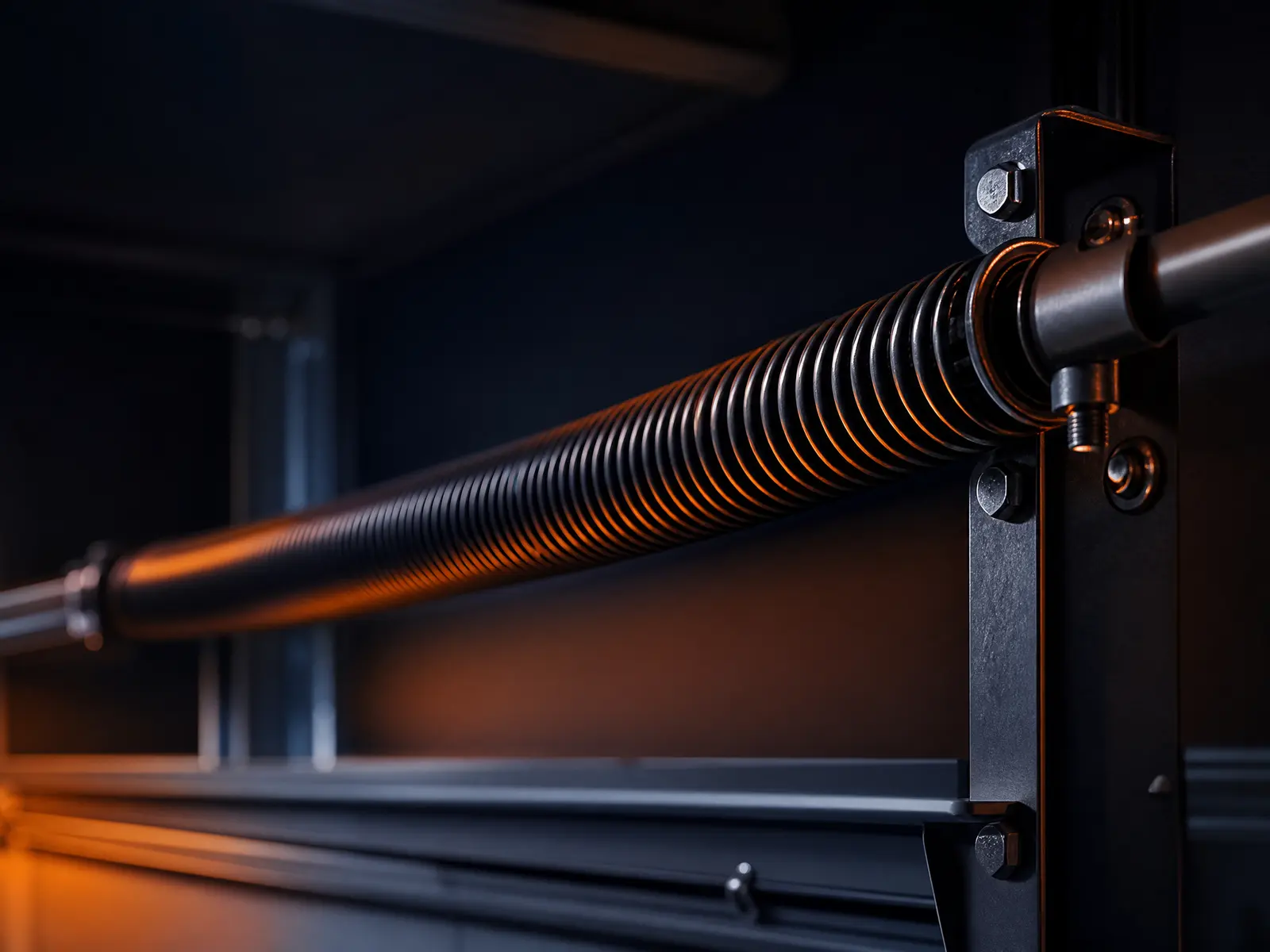
A broken torsion spring is a mechanical failure. Look at the shaft above the door: a spring that has let go shows a clean gap of an inch or two between coils, or a coil that has visibly separated. The door will feel impossibly heavy by hand, sit unevenly, or refuse to lift at all, and the opener will strain and give up. That is hundreds of pounds of unsupported weight held by nothing — do not try to lift it, and do not run the opener again. The tells are covered in more detail in the signs a spring needs replacing.
A sensor fault is electrical and harmless by comparison. The two photo eyes near the floor watch for an obstruction, and when they lose alignment or get dusty the door reverses partway down, refuses to close, or closes only if you hold the wall button. The fix is often just wiping the lenses and nudging the brackets until both indicator lights are steady — the full routine is in our photo-eye sensor troubleshooting guide. If the lights are steady and the door still reverses, the fault is mechanical, not optical.
Why same-day emergency repair matters
Two failures make a garage door an emergency rather than an inconvenience. A door stuck closed traps your vehicle, and on a weekday morning in London that is a missed shift or a missed appointment. A door stuck open leaves your home and everything in the garage exposed overnight, which is a security problem no amount of waiting fixes.
Both also get worse with time and with attempts. Every press of the opener against a jammed door bends a panel a little further, frays a cable a little more, or pulls a roller closer to jumping the rail — which is how a straightforward repair turns into a door stranded halfway that needs the panels checked before it moves again.
That is why emergency service runs 24/7 across London and the surrounding 50 km, with the closest available technician dispatched rather than the next name on a schedule. Most homes are reached in about 90 minutes, and because the truck carries matched-pair springs, cable sets, rollers, and common opener parts, the repair is usually finished on that first visit. The full picture of how an after-hours call runs is in our guide to 24-hour emergency repair in London.
Up-front all-in pricing from $149, a 1-year warranty on parts and labour, and the closest technician dispatched across London + 50 km — same flat rate day or night.
How professional garage door installation works in London
Installation starts before anything is ordered. A technician measures the opening, the headroom above it, and the backroom depth along the ceiling, checks the condition of the framing the tracks will anchor into, and asks how the garage is used — attached to the house and heated, or a detached workshop — because that decides insulation and R-value more than anything in the catalogue.
On install day the sequence is fixed. The old door is unwound and removed, and its springs, tracks, and hardware go with it — removal and disposal are part of the job, not an extra line. New tracks are set plumb and parallel, the panels go up one at a time with the hinges and rollers fitted as the stack rises, the torsion spring is sized to the finished weight of the door and wound on site, and the opener is connected and its travel and force limits set. That sequence is for a sectional door; rolling steel and one-piece overhead doors install differently.
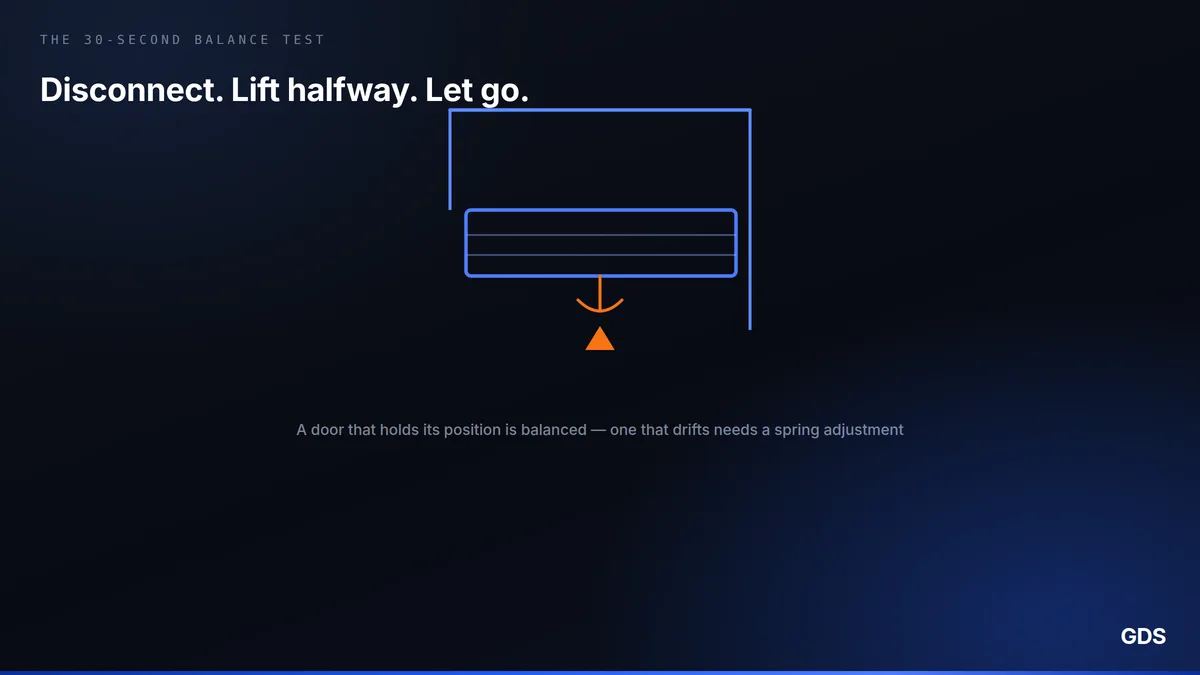
The last half hour is what separates a good install from a fast one: a balance test with the opener disconnected, a safety-reverse test on the photo eyes, and a full cycle watched end to end. A correctly installed door should hold its position at waist height when you let go of it. If you are still choosing a door, our installation service page covers materials and styles, and the types and styles guide goes deeper on the trade-offs.
Your options for affordable garage door replacement
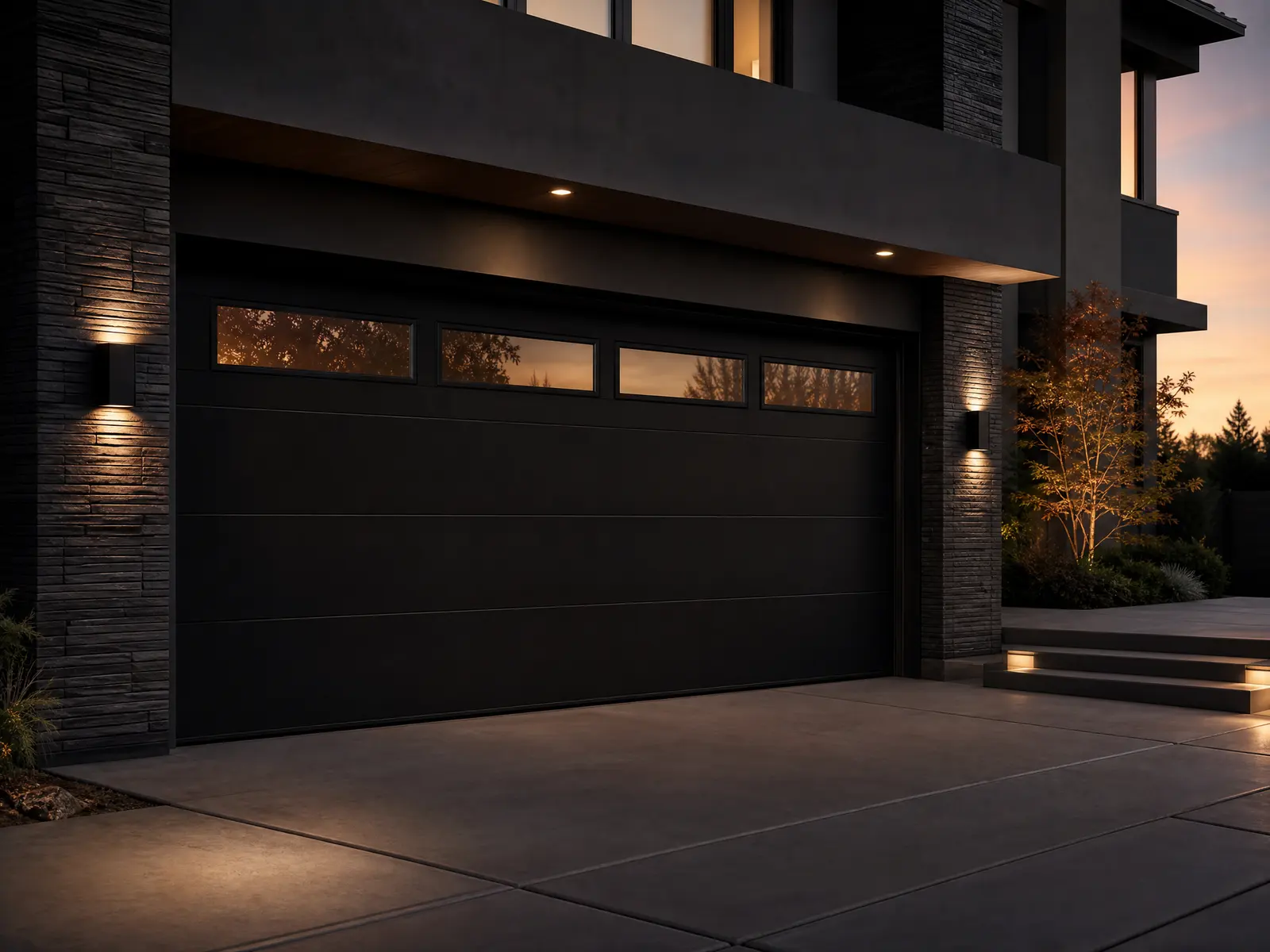
Replacement pricing moves on four things, and knowing which ones you actually care about is how the number comes down. Material comes first: steel is the default in Southwestern Ontario for good reason — durable, low-maintenance, and the least expensive per square foot. Wood looks the best and costs the most to buy and to keep. Aluminium and glass sit at the modern end, and composite splits the difference.
Size is second, and it is not linear — a double door is more than twice a single because of the weight, the spring system, and the hardware. Insulation is third: an insulated door pays for itself on an attached or heated garage and is mostly wasted on a cold detached one. Windows and decorative hardware are last, and they are the easiest place to trim without regretting it.
A new door installed in London starts at $1,499 and rises from there with size, material, insulation, and glazing. Before you commit to replacing at all, it is worth running the numbers on repair versus replacement — a door with sound panels and a tired spring is usually a repair, while a door with rust through the bottom section or two cracked panels rarely is.
How long installation actually takes
Plan on 4 to 8 hours for a standard residential installation, and treat the whole day as spoken for. A straight single-door swap on sound framing lands at the short end. A double door, a torsion conversion from old extension springs, a new opener on the same visit, or framing that needs repair before the tracks can be anchored all push toward the long end.
What genuinely adds time is anything structural. Rotted jambs, an out-of-square opening, or headroom too tight for a standard track set means the framing gets fixed first — and skipping that to save an afternoon guarantees an alignment problem within the year.
One thing worth insisting on: do not let a crew leave without the balance and safety-reverse tests done in front of you. A door that fails either one is a callback waiting to happen, and it takes ten minutes to prove. Once it is in, our full installation walkthrough covers what to expect on the day and afterwards.
What repair and installation cost in London, Ontario
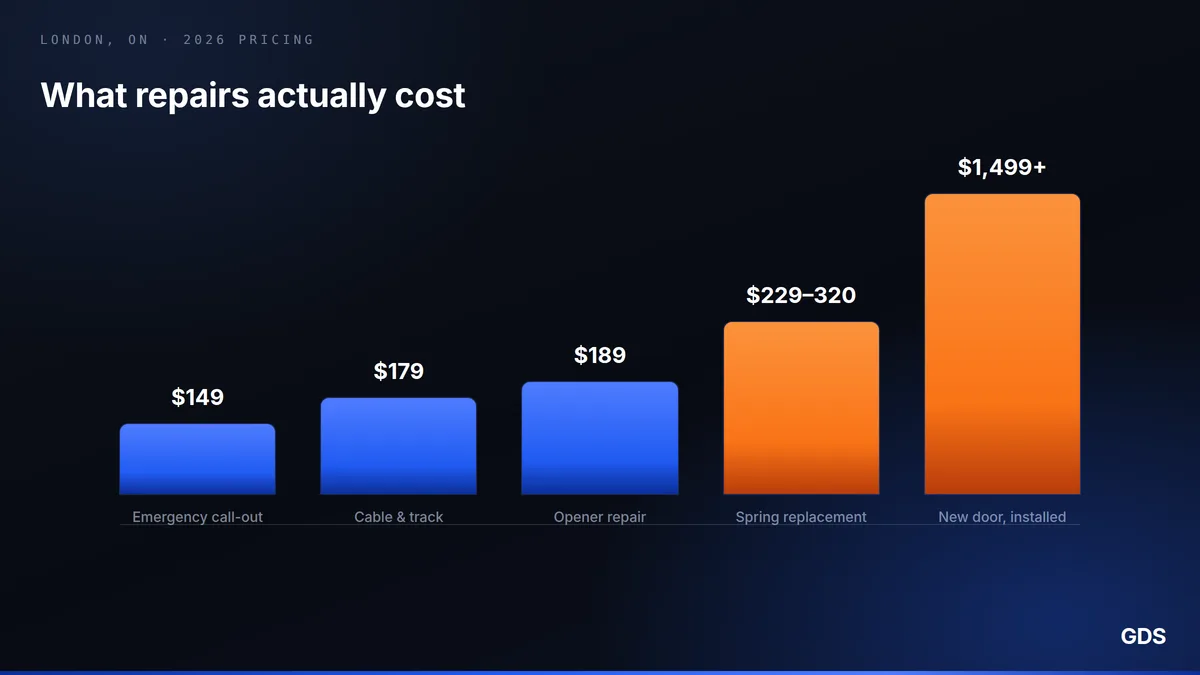
Here are the real numbers we work from across London and the surrounding area, parts and labour included, each with a 1-year warranty. Repair starts at $149 for the diagnostic plus the fix. Spring replacement runs $229–$320 depending on whether it is one spring or a matched pair and on the size and weight of the door. Cable and track repair starts at $179. Opener repair starts at $189. An annual tune-up is $150 for most single-door homes. A new door installed starts at $1,499, with old-door removal included.
Emergency work is billed at the same flat rate as a weekday call — there is no midnight, weekend, or holiday surcharge, and no travel fee within 50 km of London. What moves the final number is the part, not the hour: a common torsion spring is on the truck, while a discontinued opener logic board has to be sourced.
Two things are worth demanding from any provider, us included. One all-in price confirmed before the work starts, and a written warranty on parts and labour. The "$49 spring special" is the oldest pattern in this trade — the technician arrives, discovers the job is bigger, and the bill triples. Our full London repair cost breakdown shows what each job includes, and the instant quote returns a real price band before anyone comes out.
Finding affordable emergency repair without getting burned
Cheap and affordable are not the same thing, and emergency pricing is where the difference shows. An affordable emergency call is one where the rate is the same at 2 a.m. as at 2 p.m., the price is confirmed before the work starts, and the repair is warrantied so you are not paying for it twice.
Three checks sort the real crews from the answering services. Ask whether the technician is local or dispatched from out of town, because a truck two hours away is a travel fee waiting to happen. Ask what the after-hours rate is — if the answer is a multiplier, that is the whole business model. And ask what is on the truck: a shop that stocks springs, cables, and rollers finishes tonight, and a shop that does not is booking you a second visit.
Reviews are the fastest way to check a company keeps its promises, and how to choose a repair company in London covers what to look for beyond the star rating. Licensing and insurance are the floor, not a selling point.
Maintenance that prevents most garage door problems
Almost every emergency call we run traces back to a part that had been wearing for months in plain sight. The maintenance that prevents it costs nothing but attention and takes about twenty minutes twice a year.
Lubricate the rollers, hinges, bearings, and springs with a garage-door-specific silicone or lithium product every six months. Never use WD-40 — it is a solvent, it strips the grease that is actually doing the work, and the door is quieter for a week and worse for a month. Never grease the inside of the track either; rollers are meant to roll on clean dry steel, and grease there collects grit.
Wipe the photo-eye lenses whenever you think of it, run a wrench over the visible hardware once a year because vibration backs bolts off, and watch the door run for ten seconds each month with the door in view and the radio off. New noise, a hitch at the same spot, or a door sitting crooked at the bottom is your notice. And every fall before the cold sets in, our Ontario winterizing routine covers the seal and lubrication changes that matter here specifically.
Troubleshooting common issues in five minutes
Before you book anything, four checks resolve a surprising share of dead doors. If the opener does nothing at all, check that it still has power — a tripped GFCI or a bumped plug at the ceiling outlet is the single most common non-repair. If the remote is dead but the wall button works, it is the remote battery or the pairing, not the door; the remote fixes guide walks through both.
If the door reverses just before it touches the floor, the close-limit setting is off by a fraction and the opener thinks it hit something. If it reverses partway down every time, look at the photo eyes. And if the door binds at the same point in its travel, stop — that is a mechanical fault, and running the opener into it is how panels get bent.
The line is simple and it is worth holding. Cleaning, lubricating, tightening visible bolts, and resetting remotes are homeowner work. Springs, cables, and anything holding the weight of the door are not — they are under extreme tension and cause the serious injuries in this trade. The common issues guide sorts the rest by which side of that line they fall on.
Why professional inspection protects your warranty and safety
Most manufacturer warranties on doors and openers assume the door is professionally maintained, and a claim on a spring or an opener that has never been serviced is an easy one to decline. An annual inspection with a record of it is the cheapest insurance on a $1,499+ door there is.
The safety side is the more important half. A 17-point tune-up at $150 checks and adjusts spring tension and door balance, retorques every fastener, inspects cables for fraying and rollers for failed bearings, and calibrates the auto-reverse so the door stops for a child or a bumper the way it is supposed to. Those are the systems that hurt people when they are wrong, and they drift out of adjustment quietly.
The economics are straightforward: $150 a year catches a fraying cable while it is still a cable, instead of at 11 p.m. when it snaps and takes the door crooked with it. Our tune-up and safety inspection guide lists exactly what gets checked, and every visit runs across London and the surrounding 50 km on the same flat rate.
Frequently asked questions
What are the signs I need garage door repair?
A new noise (squeal, grind, rattle, or a single bang), a door that moves unevenly or sits crooked when closed, hesitation at the same point every cycle, a door that reverses on its own, and visible damage to a panel, cable, roller, or spring. Any one of them is worth booking before it strands you — most emergency calls trace back to a warning sign that had been there for weeks.
How much does garage door repair cost in London, Ontario?
Repair starts at $149 for the diagnostic plus the fix, parts and labour included with a 1-year warranty. From there it depends on the part: spring replacement runs $229–$320, cable and track repair starts at $179, and opener repair starts at $189. Emergency calls are billed at the same flat rate day or night, with no after-hours surcharge and no travel fee within 50 km of London.
How can I tell a broken spring from a sensor problem?
Look at the torsion spring on the shaft above the door — a clean gap of an inch or two between coils means it has broken, and the door will feel impossibly heavy or refuse to lift. A sensor fault instead makes the door reverse partway down or refuse to close with nothing in the way, and the photo-eye indicator lights near the floor will be off or flickering. Sensor cleaning is safe DIY; a broken spring is not.
Can I open my garage door manually if the spring is broken?
No. With a broken spring the door is hundreds of pounds of unsupported weight and can drop. Leave it closed, unplug the opener so nobody can cycle it, keep children and pets out of the garage, and book a technician. Emergency dispatch runs 24/7 across London and the surrounding 50 km.
How long does professional garage door installation take?
Most residential installations take 4 to 8 hours. A straight single-door swap on sound framing is at the short end; a double door, a torsion conversion, a new opener fitted at the same time, or framing that needs repair first pushes toward the long end. Old-door removal and disposal are included, and the visit should end with a balance test and a safety-reverse test done in front of you.
How much does a new garage door cost installed in London?
A new door installed starts at $1,499 and rises with size, material, insulation R-value, and window glazing, with old-door removal included. Steel is the most cost-effective choice for Southwestern Ontario, insulation is worth it on an attached or heated garage, and windows and decorative hardware are the easiest place to trim the quote.
Is emergency garage door repair more expensive at night?
Not with us. Emergency repair starts at $149 and is billed at the same flat rate whether the call comes at 2 p.m. or 2 a.m. — no midnight, weekend, or holiday surcharge, and no travel fee within 50 km of London. Any provider whose after-hours rate is a multiplier of the day rate is telling you something about their business model.
How often should I service my garage door?
Lubricate the rollers, hinges, bearings, and springs twice a year, wipe the photo-eye lenses whenever you think of it, and watch the door run for ten seconds each month. Book a professional 17-point tune-up annually — $150 for most London homes — which keeps the manufacturer warranty intact, recalibrates the auto-reverse safety system, and catches a fraying cable or failing roller while it is still cheap to replace.
Related guides
Garage Door Repair Cost in London, Ontario: 2026 Guide
Real 2026 price ranges for every common garage door repair in London — springs, openers, cables, and tracks — plus what drives the number and how to dodge bait pricing.
Emergency Garage Door Repair Services in London, Ontario: Fast, Reliable 24/7 Solutions
A complete guide to 24/7 emergency garage door repair in London, Ontario — the repairs covered, how fast help arrives, what it costs, and how to spot trouble before it strands you.
New Garage Door Installation in London, Ontario: A Buyer’s Guide
What a new garage door install actually involves in London — the free measure, choosing material and insulation, the install day, and what to expect on price.